
How to Play Kilat Kancil
Swipe & keyboard controls, obstacles, the flash dash, power-ups, the Iron Bird, missions, the shop, and characters.
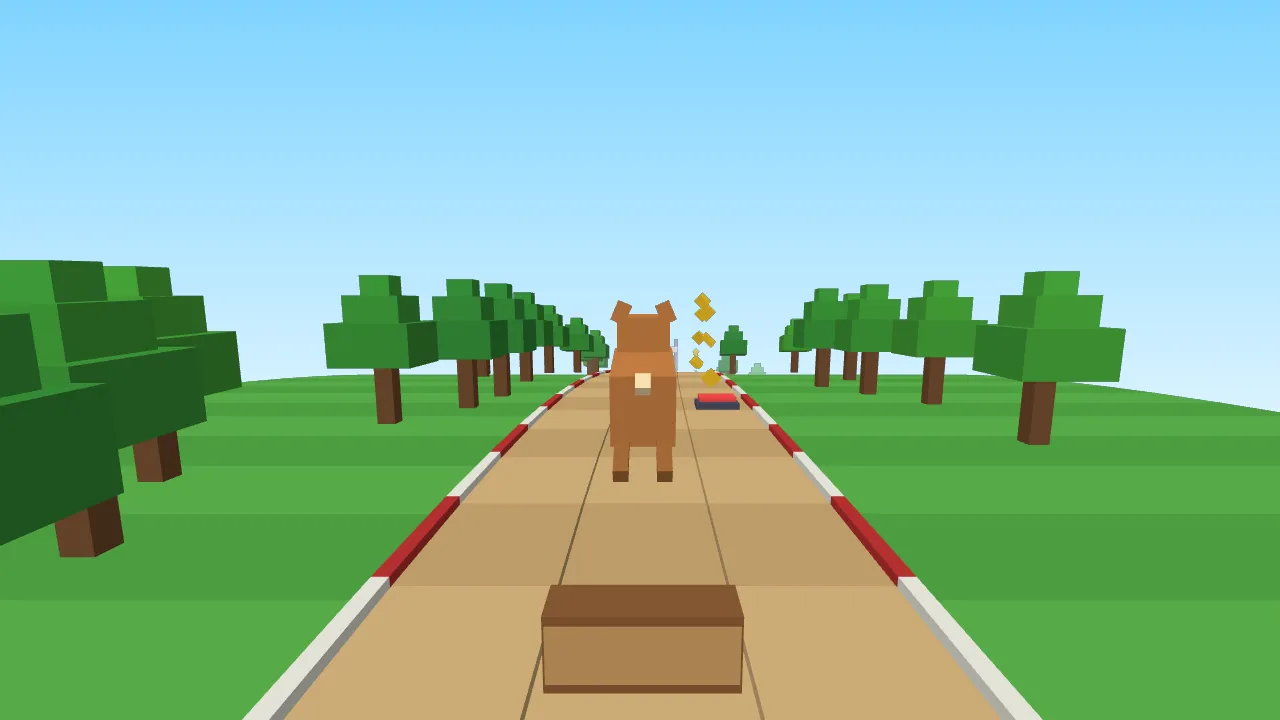
Kilat Kancil (Lightning Mouse-Deer) is a 3D endless runner you can play right in your browser. Kancil, the clever mouse-deer from Indonesian folk tales, runs on his own down a three-lane road that keeps getting faster. There’s no “forward” button, because your only job is to switch lanes, jump, and slide at the right moment.
This guide covers the controls, every obstacle type, the flash dash, the Iron Bird boss, and missions and the shop. Once you understand all of it, you’ll know why a run ended and what to change on the next one.
The goal
The goal is simple: run as far as you can and pick up gold pieces along the way. Your score comes from distance, gold, and actions like smashing robots. One collision with an obstacle trips Kancil and ends the run, unless you have a shield or are dashing.
Speed keeps rising throughout a run, from a relaxed pace at the start to more than double that. An obstacle that’s easy to dodge in the first 200 metres feels much harder past 2,000 metres, because your reaction window keeps shrinking. That’s what makes the end of every run so tense.
Controls
Kilat Kancil works with a touchscreen, keyboard, or gamepad. On a touchscreen you can swipe anywhere, not just near Kancil. The game also works with your phone upright or sideways, and in portrait the camera automatically widens its view so all three lanes stay visible.
One move players often miss is the fast drop. Swipe down while Kancil is in the air and he drops straight into a slide. That matters when a low barrier comes right after something you had to jump. Every control is listed in the table below.
| Action | Touchscreen | Keyboard | Gamepad |
|---|---|---|---|
| Switch lane | Swipe left / right | ← → / A D | Stick / D-pad |
| Jump | Swipe up or tap | ↑ / W / Space | A |
| Slide / fast drop | Swipe down | ↓ / S | B |
| Flash dash | DASH button | Shift / X | X |
| Pause | Pause button | Esc / P | Start |
Obstacle types
Every obstacle in Kilat Kancil has one right answer: change lanes, jump, or slide. Recognising its shape from far away is the key, because the road’s colours change in each zone while the obstacle shapes stay the same.
Obstacles often come in pairs or threes across different lanes. If two lanes are blocked by tall crates, the third usually holds something you can jump or slide. Here’s the full list.
- Tall wooden crates: too high to jump. The only way past is to change lanes.
- Low logs and spikes: jump over them.
- Pits: gaps in the road you must jump. If you’re late, Kancil falls and can’t climb back up.
- Red-and-white barriers: set at head height, so slide under them.
- Robots: running into one trips you, but a robot is smashed if you touch it while you’re in the air, and smashing it gives bonus score.
Gold pieces and the flash dash
Every gold piece you collect fills the DASH meter, shown on the button in the bottom-right corner. When it’s full, the button pulses. Press it for a flash dash: for a few seconds Kancil races much faster, can’t be hurt, and smashes through anything he hits, including tall crates and bombs.
Gold is also the game’s currency. Everything you collect in a run goes into your bank for spending in the Shop. So every piece does two jobs: it fills your dash now and buys upgrades later.
Power-ups on the road
Besides gold, power-ups appear in a lane now and then. Each one helps in a different situation, and knowing when to grab them can add hundreds of metres to a run.
The magnet pulls in gold from all three lanes for a few seconds, so you don’t have to switch lanes to collect a trail. The blue shield absorbs one collision, then disappears. The red spring launches Kancil high into a trail of gold in the air, well above the obstacles below.
Four zones
Every 800 metres the scenery changes. The order is Morning Forest, Beach, Dusk Cliffs, and Night City, then the cycle repeats. The zone changes give a sense of progress and make handy distance markers.
Changing zones doesn’t change the rules. Only the colours and lighting change, so get used to reading obstacle shapes rather than colours. In the darker Night City, that habit really helps.
Boss: the Iron Bird
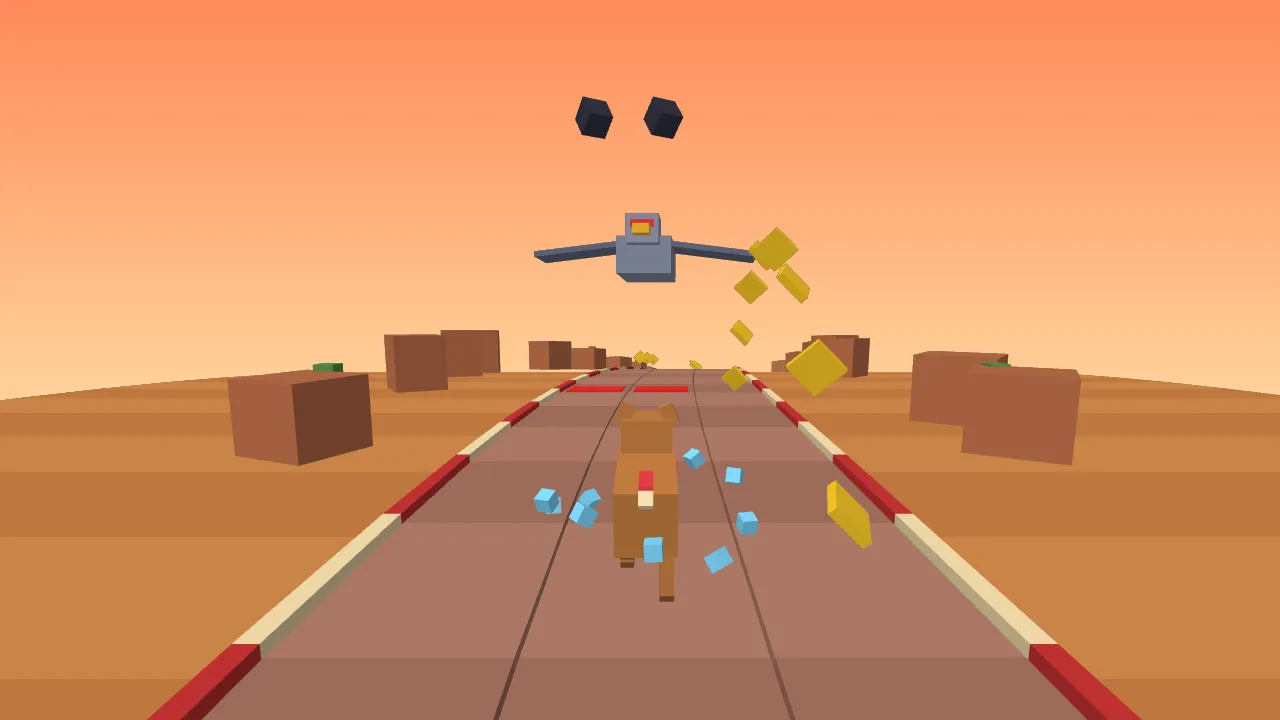
Every 1,600 metres the Iron Bird arrives. This robot bird flies above the road and attacks three times. Before each attack it marks one or two lanes with a flashing red box, then drops bombs there about a second later. There’s always one safe lane.
After the third attack, the Iron Bird swoops low in one lane. Run into it to catch it for 50 gold and 1,000 base points before the score multiplier. During the boss fight normal obstacles don’t spawn, only trails of gold, so you can focus on reading the red marks.
Missions
There are always three active missions, visible from the menu. Each is counted within a single run, such as collecting a number of gold pieces, running a certain distance, smashing robots, using the dash a number of times, or bouncing off springs.
A finished mission pays out gold and is immediately replaced by a new one with a higher target. Missions are the fastest way to grow your bank, so it’s worth reading them before each run and working on them deliberately.
Shop and characters
The Shop has five permanent upgrades bought with gold. Each upgrade has several levels, and the price rises with each one. Upgrades apply to every run after you buy them.
Besides Kancil, you can unlock three characters: Bunny for 600 gold, Squirrel for 1,200, and Fox for 2,000. The upgrades are listed below.
- Longer Magnet: the magnet lasts 20% longer per level (4 levels, 100–900 gold).
- Stronger Magnet: wider magnet reach (3 levels, 150–800 gold).
- Longer Dash: the flash dash lasts 15% longer per level (4 levels, 120–1,000 gold).
- Head Start: start each run with a free dash (3 levels, 200–1,000 gold).
- Score Multiplier: +10% score per level (5 levels, 150–2,000 gold).
Continuing a run and saving progress
After tripping you can continue the run once by paying 50 gold. It’s only available once per run, so use it when a run is really worth saving.
Your best score, gold bank, upgrades, characters, and missions all save automatically in your browser’s local storage. You don’t need an account. But if you clear site data in your browser, that progress goes too.
Frequently asked questions
These are the questions new Kilat Kancil players ask most. Most of them are about devices and purchases.
We’ve kept the answers short so they’re easy to read.
Is Kilat Kancil heavy on phones?
No. The graphics use lightweight WebGL built from simple box shapes, so it runs smoothly on most phones. If it feels slow, close other browser tabs.
Can gold be bought with money?
No. There are no in-game purchases. Gold only comes from playing and completing missions.
What to do next
Once you know the controls and the obstacles, try a few runs while focusing on one thing: drifting back to the middle lane whenever the road is clear. That small habit makes almost every obstacle easier to dodge.
For advanced technique and the best order to buy upgrades, read the Kilat Kancil tips and tricks. Or jump straight in, play Kilat Kancil, and try to beat your distance record.
Continue practicing in Kilat Kancil.